
When Failure Is Not an Option
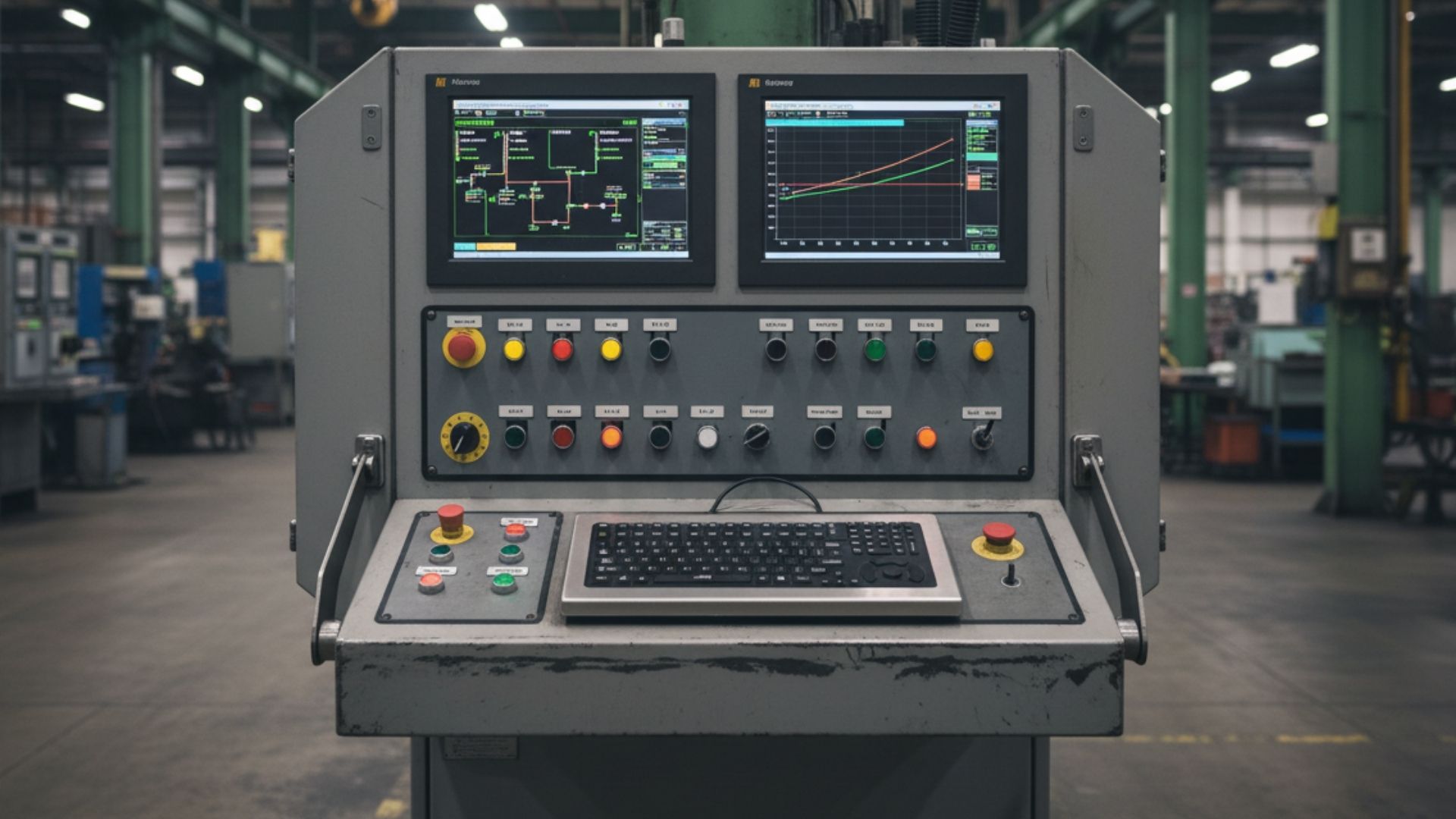
In military and defence operations, peripherals are not accessories — they are mission enablers. Keyboards, pointing devices, displays, and connectivity hardware form the human-machine interface through which situational awareness, command, and control are exercised. In these environments, failure does not mean inconvenience; it means lost time, degraded capability, or operational risk.
This is why MIL-STD-810H compliance is non-negotiable.
For procurement officers, systems integrators, and defence contractors, the challenge is not simply selecting equipment that “looks rugged”, but ensuring it is proven to survive the mechanical, climatic, and operational stresses encountered in real deployments. This article explains what MIL-STD-810H actually tests, why it matters specifically for military peripherals, and how FB Peripherals aligns its product portfolio to meet the realities of defence use — not consumer expectations.
Understanding MIL-STD-810H: More Than a Badge
MIL-STD-810H is a United States Department of Defense environmental engineering standard. Its purpose is often misunderstood. It is not a single pass/fail certification, nor is it a generic marketing label. Instead, it is a structured framework of test methods designed to replicate the environmental stresses equipment will face throughout its lifecycle.
The “H” revision reflects decades of operational feedback from land, sea, and air domains, with updated procedures aligned to modern materials, electronics, and deployment profiles.
What the Standard Is Designed to Do
MIL-STD-810H evaluates whether equipment can:
- Operate reliably in extreme environmental conditions
- Survive transport, handling, and deployment stresses
- Maintain functional integrity after repeated mechanical abuse
- Continue to perform where commercial equipment predictably fails
For military peripherals — often deployed forward, vehicle-mounted, or integrated into C4ISR systems — these requirements are fundamental.
The Environmental Realities of Military Peripheral Deployment
Unlike office IT equipment, military peripherals are exposed to conditions that are:
- Highly variable
- Often simultaneous
- Frequently prolonged
- Rarely controlled
A single keyboard or pointing device may experience Arctic cold, desert heat, airborne vibration, salt fog, and repeated shock — all within one deployment cycle.
MIL-STD-810H addresses these realities through specific test methods.
Key MIL-STD-810H Test Categories Explained
1. Vibration: The Silent Equipment Killer
Why it matters
Vibration is one of the most common causes of electronic failure in military systems. Vehicle-mounted terminals, naval consoles, rotary-wing aircraft, and unmanned platforms all generate continuous, multi-axis vibration that consumer peripherals are never designed to withstand.
What MIL-STD-810H tests
- Random and sine vibration profiles
- Multi-axis exposure
- Extended duration cycles
- Resonance identification
Peripheral-specific risks
- Cracked solder joints
- Connector fatigue
- Internal cable chafing
- Sensor drift in pointing devices
- Key matrix failure in keyboards
FB Peripherals approach
FB Peripherals specifies peripherals engineered with:
- Reinforced internal assemblies
- Secured connectors and strain relief
- Low-mass internal components to reduce inertial stress
- Proven vibration test profiles matched to land, air, and maritime platforms
The result is input devices that remain stable and responsive even when mounted in continuously vibrating environments.
2. Shock: Surviving the Impact, Not Just the Drop
Why it matters
Shock events occur during:
- Vehicle movement over rough terrain
- Aircraft landings
- Naval impacts
- Equipment handling and redeployment
- Accidental drops during field operations
What MIL-STD-810H tests
- Functional shock (operational impacts)
- Transit drop tests
- Terminal peak acceleration exposure
- Repeated impact cycles
Peripheral-specific risks
- Fractured housings
- Keycap dislodgement
- Optical sensor misalignment
- Internal PCB cracking
- Loss of calibration
FB Peripherals approach
Products within the FB Peripherals portfolio are selected and configured with:
- High-impact housings
- Internal shock isolation
- Sealed mechanical key mechanisms
- Solid-state sensing technologies
- Proven drop and impact survivability
This ensures peripherals continue operating after real-world shock events, not just laboratory simulations.
3. Extreme Temperature: From Arctic Cold to Desert Heat
Why it matters
Military operations do not occur at room temperature. Equipment must function:
- In sub-zero environments
- In direct solar exposure
- Inside sealed vehicle cabins
- Across rapid temperature transitions
What MIL-STD-810H tests
- High temperature operation and storage
- Low temperature operation and storage
- Temperature cycling
- Thermal shock
Peripheral-specific risks
- Brittle plastics cracking in cold
- LCD lag or blackout
- Lubricant viscosity changes
- Touch and key response degradation
- Condensation-induced short circuits
FB Peripherals approach
FB Peripherals aligns with peripherals designed for:
- Wide operational temperature ranges
- Industrial-grade materials
- Temperature-stable key and sensor mechanisms
- Components selected for thermal tolerance, not cost efficiency
This ensures consistent input performance regardless of climate or deployment geography.
4. Humidity, Rain, and Condensation
Why it matters
Moisture ingress is one of the fastest ways to disable electronics. Military peripherals may be exposed to:
- Heavy rain
- High humidity
- Condensation during altitude or temperature change
- Wash-down procedures
What MIL-STD-810H tests
- Cyclic humidity exposure
- Condensation formation
- Extended damp heat conditions
Peripheral-specific risks
- Corrosion of contacts
- Key matrix shorting
- Sensor contamination
- Connector failure
FB Peripherals approach
Many FB Peripherals-supplied devices incorporate:
- Fully sealed designs
- IP-rated enclosures aligned with military use
- Chemically resistant materials
- Washable and decontaminable surfaces
These features support both environmental resilience and hygiene requirements in defence and medical-military applications.
5. Dust, Sand, and Particulate Ingress
Why it matters
Desert and arid environments remain among the most challenging for electronics. Fine sand and dust penetrate consumer peripherals rapidly, causing abrasion, blockage, and failure.
What MIL-STD-810H tests
- Blowing dust
- Blowing sand
- Extended particulate exposure
Peripheral-specific risks
- Jammed keys
- Optical sensor interference
- Accelerated wear
- Loss of tactile feedback
FB Peripherals approach
FB Peripherals supports peripherals with:
- Fully sealed keyfields
- Non-optical pointing technologies where appropriate
- Smooth, debris-resistant surfaces
- No exposed moving parts
This enables continued operation where conventional keyboards and mice fail within days or weeks.
6. Salt Fog and Corrosive Atmospheres
Why it matters
Naval operations, coastal deployments, and shipboard installations introduce highly corrosive conditions that rapidly degrade unprotected electronics.
What MIL-STD-810H tests
- Salt fog exposure cycles
- Corrosion resistance
- Post-exposure functional integrity
Peripheral-specific risks
- Connector corrosion
- Key contact oxidation
- Housing degradation
- Mechanical binding
FB Peripherals approach
FB Peripherals aligns with devices built using:
- Corrosion-resistant materials
- Sealed connectors
- Marine-grade coatings where required
This ensures reliability across maritime and amphibious platforms.
Why Consumer-Grade Peripherals Fail — Predictably
From a procurement perspective, it is tempting to evaluate peripherals based on:
- Cost
- Availability
- Familiar form factors
However, consumer peripherals are optimised for:
- Short lifecycle use
- Controlled environments
- Minimal mechanical stress
- Planned obsolescence
They are not designed for:
- Continuous vibration
- Repeated shock
- Environmental sealing
- Long-term deployment without maintenance
The result is:
- Higher failure rates
- Increased spares inventory
- Operational downtime
- Higher total cost of ownership
- Increased risk to mission continuity
MIL-STD-810H-aligned peripherals avoid these outcomes by design.
MIL-STD-810H and Procurement Confidence
For defence contractors and military buyers, compliance delivers more than technical assurance — it delivers procurement confidence.
Key procurement advantages
- Reduced technical risk
- Clear alignment with defence specifications
- Simplified system qualification
- Improved lifecycle predictability
- Lower through-life support costs
FB Peripherals understands that procurement officers are not only buying hardware — they are buying risk reduction.
FB Peripherals: Compliance-Driven, Mission-Focused
FB Peripherals positions itself not as a general IT supplier, but as a specialist in rugged, compliance-aligned peripherals for defence and security environments.
What sets FB Peripherals apart
- Focus on mission-critical use cases
- Alignment with MIL-STD-810H environmental profiles
- Portfolio built around rugged keyboards, pointing devices, displays, and connectivity
- Understanding of defence procurement processes
- Support for system integrators and OEM programmes
Rather than offering generic products, FB Peripherals works within the realities of military deployment and system integration.
Beyond Compliance: Lifecycle Reliability
MIL-STD-810H is not just about surviving a test — it is about surviving years of use.
Lifecycle considerations include
- Mean time between failure (MTBF)
- Field serviceability
- Long-term availability
- Configuration stability
- Backward compatibility
FB Peripherals prioritises devices designed for extended service life, ensuring:
- Consistent specifications over time
- Reduced retraining
- Simplified spares management
- Lower total ownership cost
Integration Into Military Systems
Military peripherals rarely operate in isolation. They are integrated into:
- Vehicle systems
- Command consoles
- Mobile shelters
- Tactical workstations
- Secure network environments
FB Peripherals supports this by offering:
- Standardised interfaces
- Secure connectivity options
- Mounting and integration compatibility
- Support for legacy and modern platforms
This systems-level thinking is essential for defence programmes.
Why MIL-STD-810H Compliance Is Non-Negotiable
For military and defence contractors, the question is not whether MIL-STD-810H matters — it is whether failure is acceptable.
When operations depend on:
- Reliable input
- Consistent control
- Immediate responsiveness
- Equipment that works every time
Compliance becomes the baseline, not a differentiator.
Conclusion: Engineering for Reality, Not the Lab
MIL-STD-810H exists because real-world military environments are unforgiving. Peripherals that cannot withstand vibration, shock, temperature extremes, moisture, and contamination do not belong in mission-critical systems.
FB Peripherals aligns its product portfolio with this reality, offering peripherals engineered and selected for where they are used, not how they are marketed.
For defence contractors, integrators, and procurement officers, choosing MIL-STD-810H-aligned peripherals is not an upgrade — it is a requirement.
Beyond the screen lies the mission. The interface must never be the weak point.